5 essential vaccines for older adults
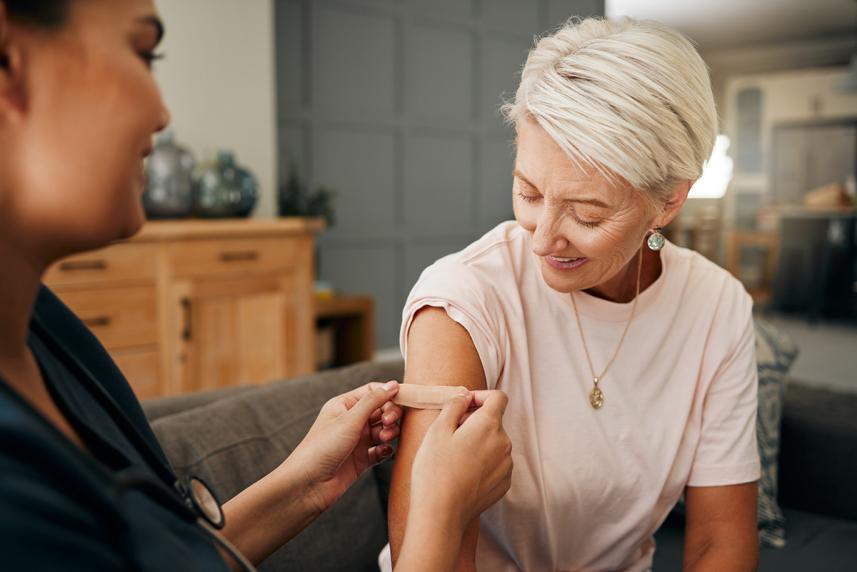
This guide includes the immunizations you need to stay healthy — and when to get them.
The information in this article is for educational purposes only and is not intended to replace medical advice from your doctor.
Think for a minute about the actions you take on a regular basis to protect your life. You probably wear a seatbelt when you drive. You likely keep smoke detectors in your home. What about how you protect yourself from getting sick? Sure, you have an immune system, which is the network of cells, tissues, and organs that works hard to fight off viruses and unhealthy bacteria.
But especially as you get older, your cells may need some help to prevent you from getting sick. That’s where vaccines come into play, notes Aly Cohen, MD, an integrative rheumatologist based in Princeton, New Jersey. “As we age, our immune system does weaken over time,” she says.
Vaccines help your immune system do its job. They teach your body how to defend against illnesses before any serious damage can be done. Vaccines are vital to living your best life, particularly for older adults.
Read on to learn about five essential vaccines to help you stay healthy. We’ll share the best time to get each, as well as any side effects that might occur.

Get care between doctor visits without leaving home.
Book your no-cost home visit today.
8 a.m. to 11 p.m. ET M–F; 9 a.m. to 5 p.m. ET Sat. (TTY: 711)
The vaccine: Updated COVID-19
The Centers for Disease Control and Prevention (CDC) recommends that most adults stay up to date with the current COVID-19 vaccine. Then you’ll be less likely to get sick. And if you do get COVID-19, you’re likely to have a milder case. You may need an additional dose if your immune system is compromised. Or you may need two doses if you haven’t gotten vaccinated against COVID-19 yet.
Who needs it: All adults, especially those with underlying conditions or who are immunocompromised. If you’ve never been vaccinated or haven’t had an updated dose, it’s especially important. Additionally, if you are 65 or older, you have a much higher risk of COVID-19 complications. That means vaccination is even more important.
When to get it: Ideally, you should get your shot as soon as the updated vaccine is available, especially heading into cold and flu season. Ask your doctor for the best timing based on your health and previous doses.
Side effects: You may feel some pain, redness, and swelling at the injection site for a few days after your shot. Some people also report symptoms such as:
- Chills
- Fever
- Headache
- Muscle pain
- Nausea
- Tiredness
Side effects usually last a few days. To help alleviate your symptoms, make sure you get rest, drink plenty of fluids, and apply a cool or warm compress to the injection site.
The vaccine: Flu
The influenza vaccine, or flu shot, protects you against infection and complications from the influenza virus. If you are age 65 or older, the CDC recommends one of three flu vaccines:
- Fluzone High-Dose Quadrivalent vaccine
- Flublok Quadrivalent recombinant flu vaccine
- Fluad Quadrivalent adjuvanted flu vaccine
Research has shown that these options work best for older adults. The shots protect against flu A and B. Your health care provider should be able to provide them.
When to get it: Experts recommend getting your flu shot every fall, in September or October. Flu infections spike every winter, so getting vaccinated in this time frame will set you up for success. That said, if you miss that window, you can still gain protection by getting vaccinated in the winter.
You may be at higher risk of complications from the flu if you are over the age of 65. That may also be the case if you have a chronic health condition such as heart disease, diabetes, or kidney disease.
Side effects: Some side effects can crop up in the days after your flu shot, including:
- Fever
- Headache
- Muscle aches
- Nausea
- Soreness, redness, or swelling at the injection site
Side effects should be mild and fade after a few days.
The vaccine: Shingles
The shingles vaccine is known as Shingrix. This immunization protects against infection from the same virus that causes chickenpox in children.
While chickenpox is no fun, the adult version — shingles — can lead to complications. One potential complication is postherpetic neuralgia, which can create long-term nerve pain. The Shingrix vaccine is 90% effective at protecting against a shingles infection.
When to get it: The CDC recommends that everyone over the age of 50 get two doses of Shingrix to protect against shingles infection. There is no maximum age for getting this vaccine. And there is no one particular time of year that’s better than another.
Research shows that you may be at higher risk of a shingles infection if:
- You have a family history of shingles.
- You have experienced recent physical trauma.
- Your immune system is suppressed through illness or medication.
Side effects: According to the CDC, you may feel some symptoms for two to three days after the shot. These might include:
- Arm soreness, redness, or swelling at injection site
- Fatigue
- Fever and chills
- Headache
- Muscle pain
- Nausea
- Stomach pain
These symptoms should stay mild and decrease after a few days.
The vaccine: Pneumonia
There are three pneumonia vaccines for adults, which protect against severe respiratory illness from up to 23 different types of pneumococcal bacteria.
When to get it: The CDC recommends that every adult over the age of 65 get vaccinated against pneumonia. You can get a pneumonia vaccine any time of year. Your provider may want you to wait up to five years from your last dose.
You may be at higher risk of a serious pneumonia infection if you have certain health issues. These include:
- Chronic kidney disease
- Chronic obstructive pulmonary disease (COPD)
- Diabetes
- Heart disease
- High blood pressure
- Obesity
Side effects: Some people feel soreness at the injection site for a few days after the shot. Others also report mild flu-like symptoms: fever, chills, headache, and muscle aches. These side effects should only last a few days.
The vaccine: Whooping cough (pertussis)
The whooping cough (pertussis) vaccine is known as Tdap. This immunization protects against tetanus, diphtheria, and pertussis.
When to get it: The American Lung Association recommends that all adults get the Tdap shot. You can get your Tdap vaccination at any time of year, every 10 years. If you have a lung condition such as asthma or COPD, it’s especially crucial not to skip this vaccine. Pertussis can cause more serious complications in people with lung conditions.
Side effects: Your injection site and that arm may be sore for a few days after the shot. Some people have reported these more rare side effects:
- Diarrhea
- Fatigue
- Headache
- Mild fever
- Nausea and vomiting
Bottom line: Vaccines can help protect you against illnesses. They may even save your life. To make sure these vaccines are right for you, talk with your health care provider. Then you can rest easy knowing you have given your body the tools it needs to keep you safe.
See our sources:
Vaccine information for adults: Centers for Disease Control and Prevention
Recommended vaccinations for adults: Centers for Disease Control and Prevention
Vaccinations and older adults: National Institute on Aging
COVID-19 vaccine basics: Centers for Disease Control and Prevention
Staying up to date with COVID-19 Vaccines: Centers for Disease Control and Prevention
People at increased risk for severe respiratory illnesses: Centers for Disease Control and Prevention
Seasonal flu vaccines: Centers for Disease Control and Prevention
Flu and people 65 years and older: Centers for Disease Control and Prevention
Shingles vaccination: Centers for Disease Control and Prevention
Risk factors for herpes zoster infection: Open Forum Infectious Diseases
Pneumococcal vaccination: Centers for Disease Control and Prevention
Whooping cough (pertussis) vaccination: Centers for Disease Control and Prevention
Pertussis in adults: American Lung Association
Diphtheria, tetanus, and whooping cough vaccination: Centers for Disease Control and Prevention